
Our values, our standards, our promise
Brinsley FC is built around a simple aim: to give local children a safe, positive and inclusive place to play football.
Our Club Charter sets out what we stand for, how we expect people to behave, and the kind of environment we want to create for players, parents, coaches, volunteers and the wider community.
Football should be competitive, enjoyable and challenging – but it should also be respectful, safe and supportive. At Brinsley FC, development comes before ego, and every child should feel they have a fair chance to play, improve and belong.
Our Values Wheel
The Brinsley FC Values Wheel brings together the behaviours and principles that guide the club.
These values apply to everyone connected with Brinsley FC – players, parents, spectators, coaches, committee members and volunteers.
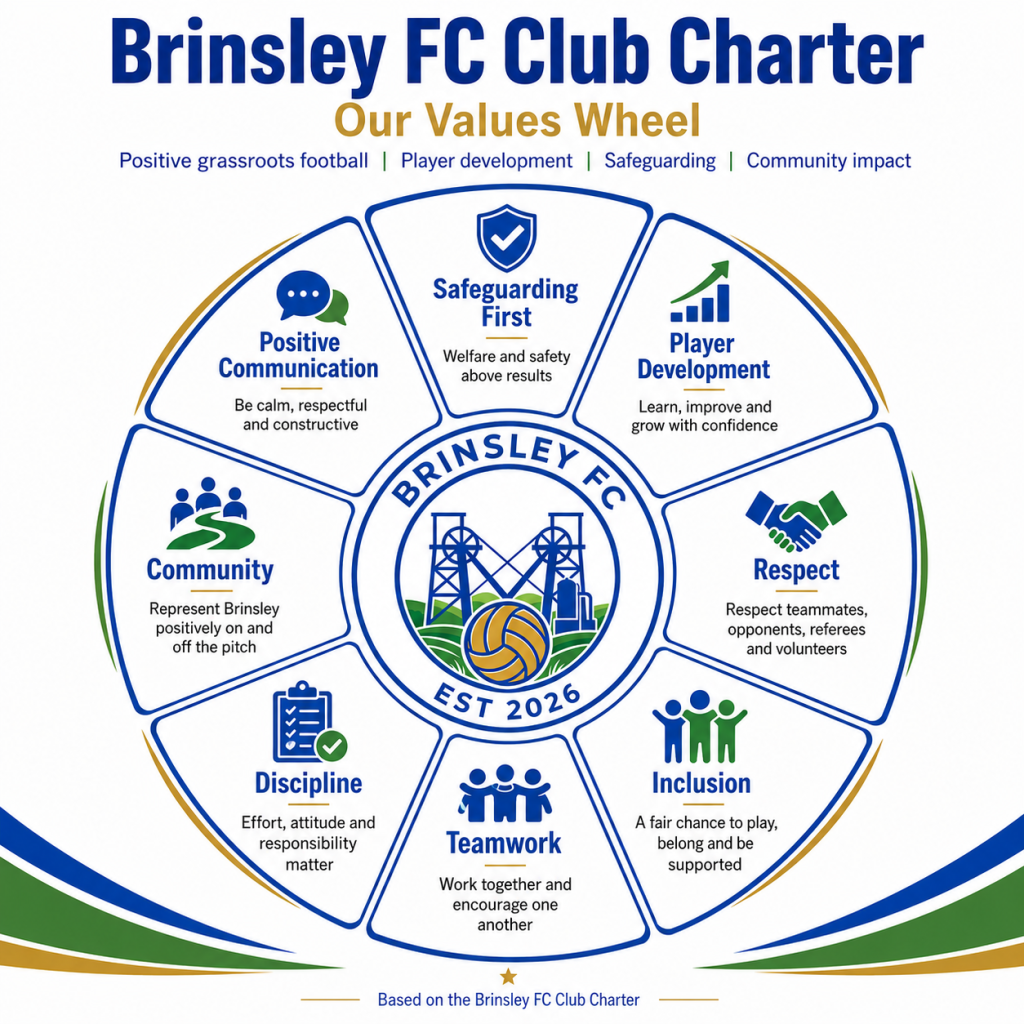
Our club values
Safeguarding first
The welfare and safety of children comes before results, reputation or convenience.
Safeguarding is everyone’s responsibility. If there is a concern about a child, adult behaviour, bullying, poor practice or welfare, it must be taken seriously and passed through the correct route.
What this means: Children should feel safe, listened to and protected at training, matches and club activities.
Player Development
We want players to learn, improve and grow with confidence.
Progress matters more than short-term results. Players develop at different speeds, and our role is to support them with encouragement, structure and clear feedback.
What this means: Mistakes are part of learning. No player should be humiliated, labelled or written off.
Respect
Respect is expected from everyone connected with the club.
Players, parents, referees, coaches, opponents, spectators and volunteers should all be treated properly.
What this means: We do not accept abuse, intimidation, aggressive behaviour, referee abuse, bullying or public criticism of children.
Inclusion
Brinsley FC should be a place where children feel they belong.
We support mixed-ability squads and players at different stages of development. Some players may be confident, some may be new, and some may need extra patience and encouragement.
What this means: Every child deserves a fair chance to play, improve and be supported.
Teamwork
Football is a team game, and our club works best when everyone pulls in the same direction.
Players should support each other. Parents should support the team. Coaches and volunteers should work together for the benefit of the children and the club.
What this means: We encourage, help and look after each other on and off the pitch.
Discipline
Good habits matter.
Effort, attitude, responsibility, attendance, listening and respect all contribute to player development and team culture.
What this means: Players are expected to try hard, listen, follow the rules and represent the club properly.
Community
Brinsley FC represents more than one team.
We want the club to be a positive part of Brinsley and the surrounding area. Everyone connected with the club should help protect our reputation, facilities and relationships with the local community.
What this means: We respect pitches, toilets, parking, neighbours, volunteers, opponents and local facilities.
Positive Communication
The way we speak to each other matters.
Concerns should be raised calmly, privately and through the correct route. Group chats and social media should not be used for emotional disputes, criticism of children or public arguments.
What this means: Be calm, respectful and constructive – especially when something feels difficult.
What the Charter Means in Practice
For players
Players are expected to play fairly, listen to coaches and match officials, respect teammates, opponents, referees and volunteers, support players who are still learning, accept that everyone develops at a different pace, and speak to a trusted adult if something feels wrong.
For parents and spectators
Parents and spectators are asked to encourage all children, respect team decisions, avoid coaching from the touchline unless asked to help, raise concerns calmly and privately, use photos and social media responsibly, and support the club’s safeguarding and welfare routes.
For coaches and managers
Coaches and managers must place the welfare and safety of children above results. Coaching should build confidence, discipline and learning, while avoiding humiliation, favouritism, aggressive criticism or inappropriate language.
For committee members and volunteers
Committee members and volunteers should act in the best interests of children, the club and the community. Decisions should be transparent, properly recorded and made with safeguarding, fairness and sustainability in mind.
Why the charter matters
The Club Charter helps protect the culture we are trying to build.
It gives everyone a clear understanding of:
- What Brinsley FC stands for
- How we expect people to behave
- How we support children
- How concerns should be raised
- How we protect welfare and safeguarding
- How we represet the club in the community
This is not about creating unnecessary rules. It is about making sure children enjoy football in a safe, respectful and supportive environment.
Our commitment
Brinsley FC will continue to build a club where children feel safe, wanted and supported.
We will promote positive grassroots football, develop players with patience and encouragement, protect children through clear safeguarding routes, and represent Brinsley with pride.
Our promise is simple:
We will put children first, support development, show respect, include others, work as a team and protect the spirit of grassroots football.